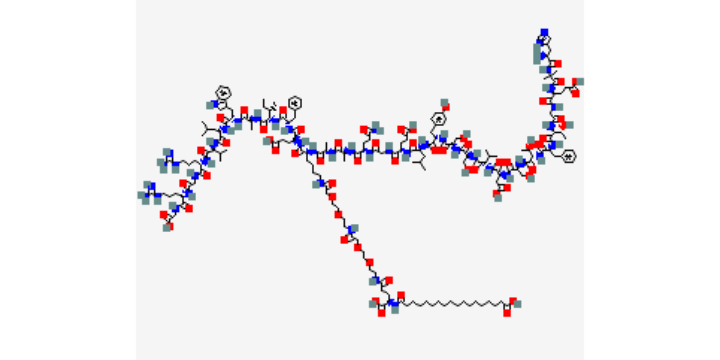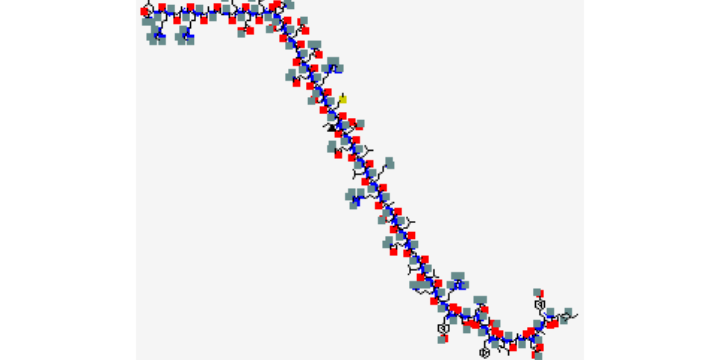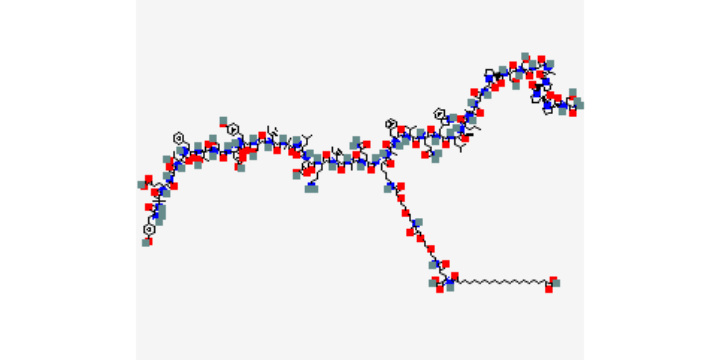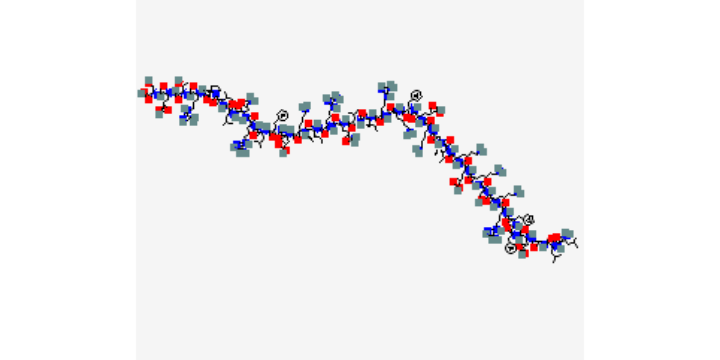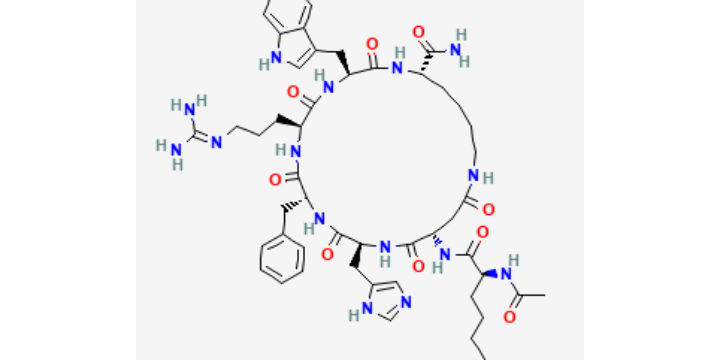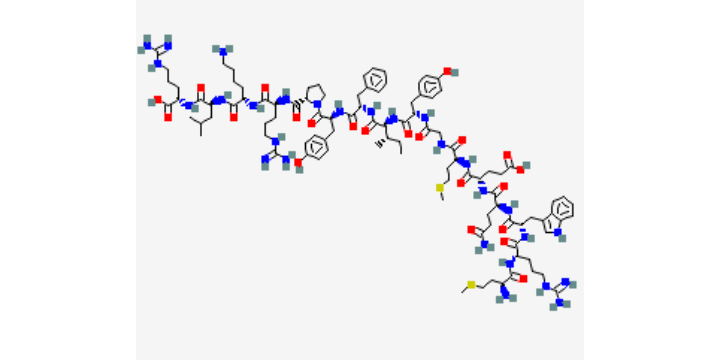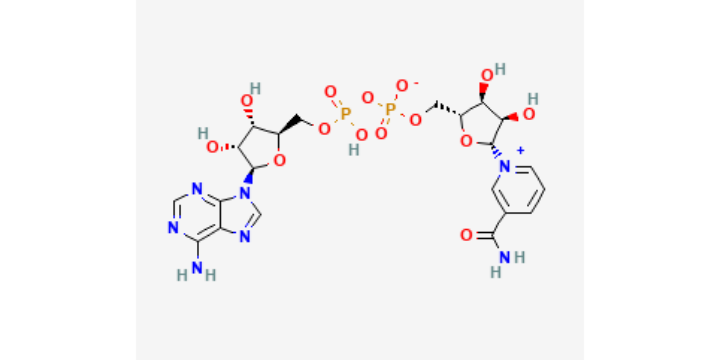
Melanocortin medicine
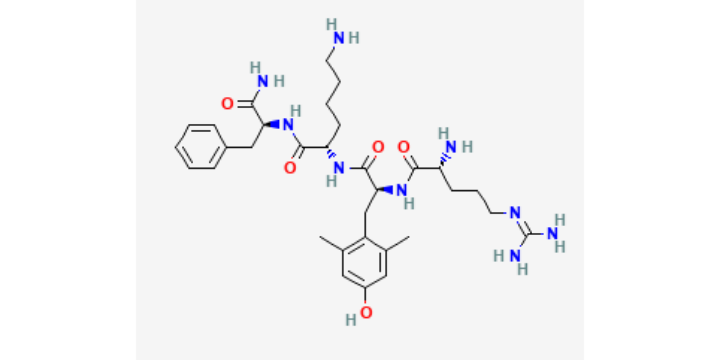
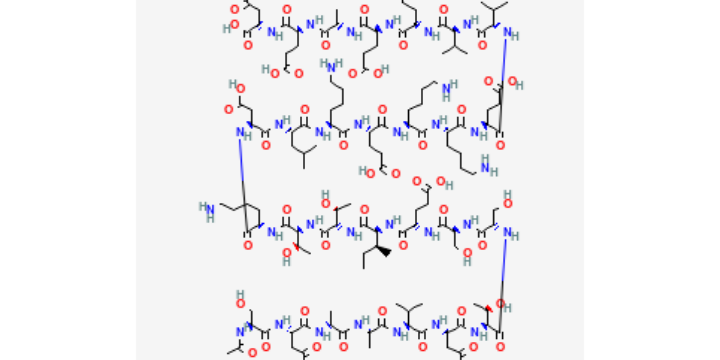
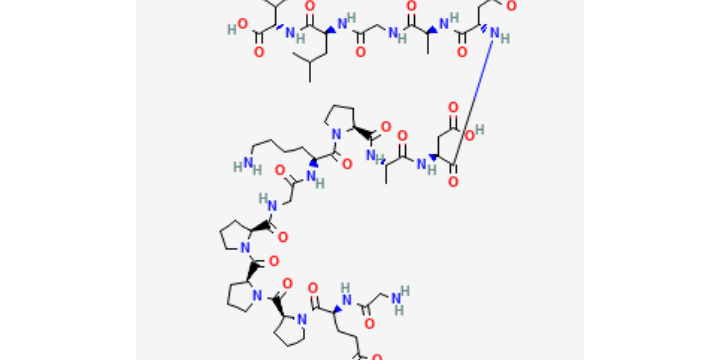
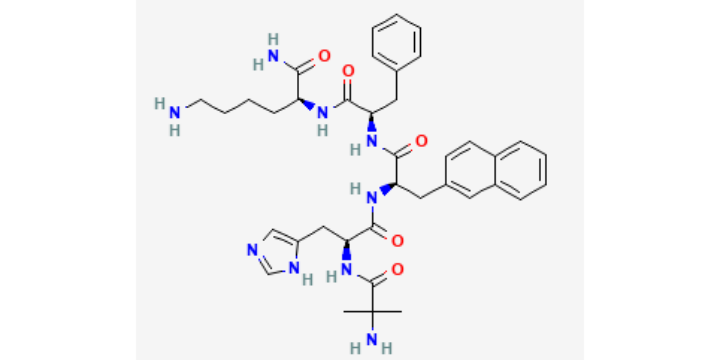
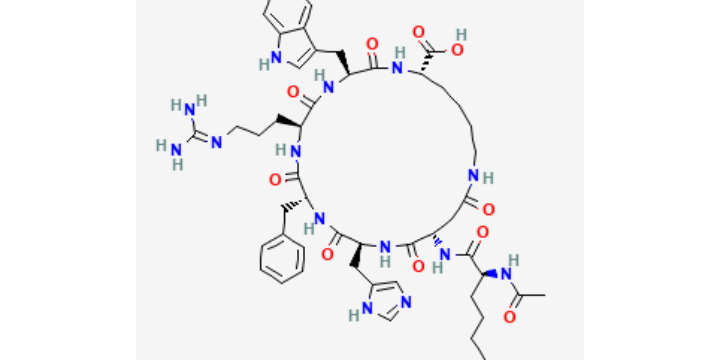
Bremelanotide
PT-141
Bremelanotide is tracked as part of the peptide, metabolic, mitochondrial, NAD, or longevity research landscape, with claims separated by evidence type and product documentation.
View compound record ->Transparent peptide, NAD+ and longevity compound database
Peptide Record organizes compounds, tracks what research has actually found, and reviews the laboratory testing and supplier documents available behind commercial products.
Research summaries · evidence strength · safety and unknowns · lab-test results · certificates of analysis (COAs) · clearly labelled commercial links
Start here
Search by compound name, accepted abbreviation or research topic.
Compound database
Start with commonly researched peptides, NAD+ compounds and metabolic medicines, or open the complete repository.
PT-141
Bremelanotide is tracked as part of the peptide, metabolic, mitochondrial, NAD, or longevity research landscape, with claims separated by evidence type and product documentation.
View compound record ->GLP-1 receptor agonist
A GLP-1 receptor agonist with controlled clinical evidence for specific approved uses, where product status, jurisdiction, and formulation matter.
View compound record ->Tesamorelin
Tesamorelin is tracked as part of the peptide, metabolic, mitochondrial, NAD, or longevity research landscape, with claims separated by evidence type and product documentation.
View compound record ->Zepbound
A dual GIP/GLP-1 receptor agonist with strong clinical evidence in approved-product contexts and separate questions for compounded products.
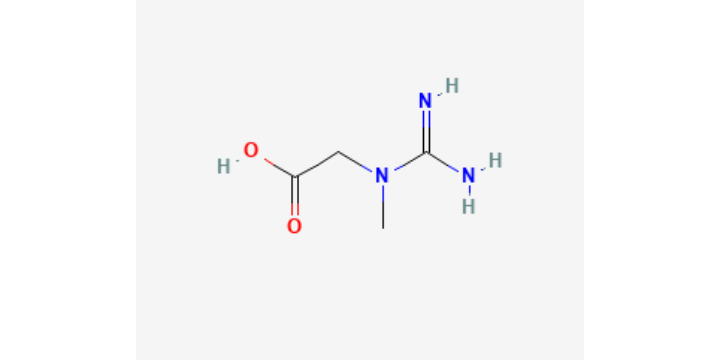
View compound record ->Creatine monohydrate
Creatine is tracked as part of the peptide, metabolic, mitochondrial, NAD, or longevity research landscape, with claims separated by evidence type and product documentation.
View compound record ->SS-31
Elamipretide is tracked as part of the peptide, metabolic, mitochondrial, NAD, or longevity research landscape, with claims separated by evidence type and product documentation.
View compound record ->Glucophage
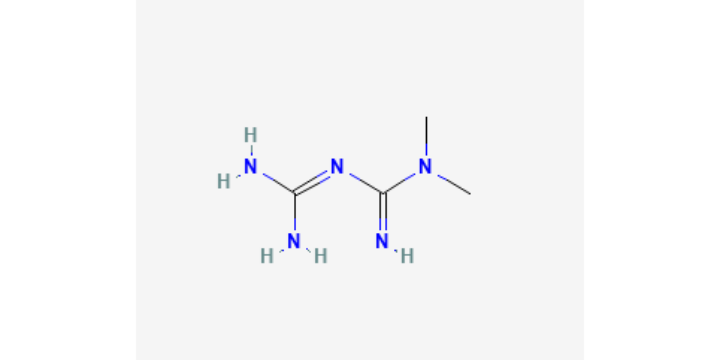
Metformin is tracked as part of the peptide, metabolic, mitochondrial, NAD, or longevity research landscape, with claims separated by evidence type and product documentation.
View compound record ->Nicotinamide riboside
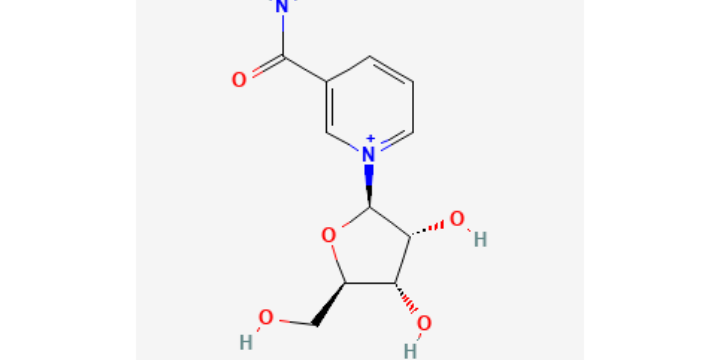
Nicotinamide riboside is tracked because it appears in peptide, NAD, metabolic, or longevity discussions and needs claim-by-claim evidence review.
View compound record ->Nicotinamide mononucleotide
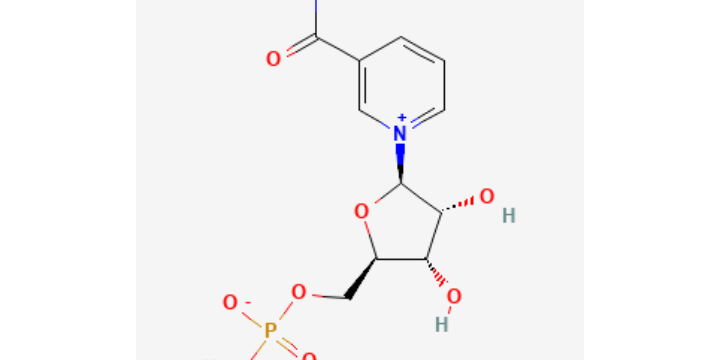
A NAD+ precursor studied in metabolism and aging-biology contexts, with stronger human relevance than many research peptides but still outcome-specific evidence.
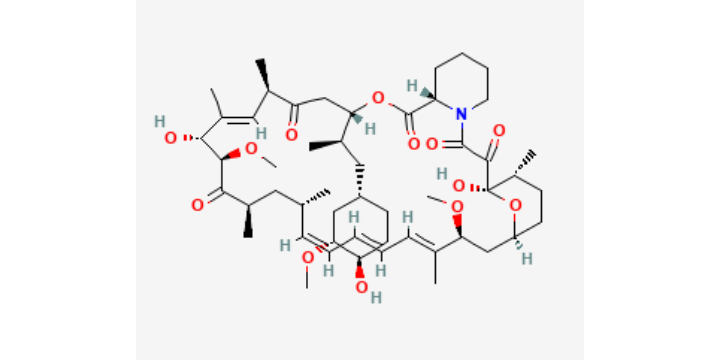
View compound record ->Sirolimus
Rapamycin is tracked as part of the peptide, metabolic, mitochondrial, NAD, or longevity research landscape, with claims separated by evidence type and product documentation.
View compound record ->LY3437943
An investigational triple GLP-1/GIP/glucagon receptor agonist with strong phase 2 signals but no approved-product status yet.
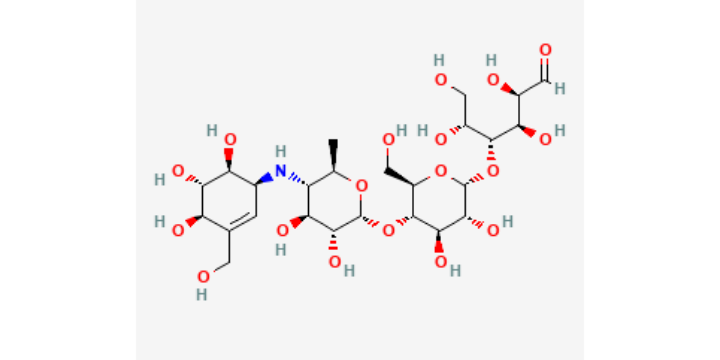
View compound record ->Precose
Acarbose is tracked as part of the peptide, metabolic, mitochondrial, NAD, or longevity research landscape, with claims separated by evidence type and product documentation.
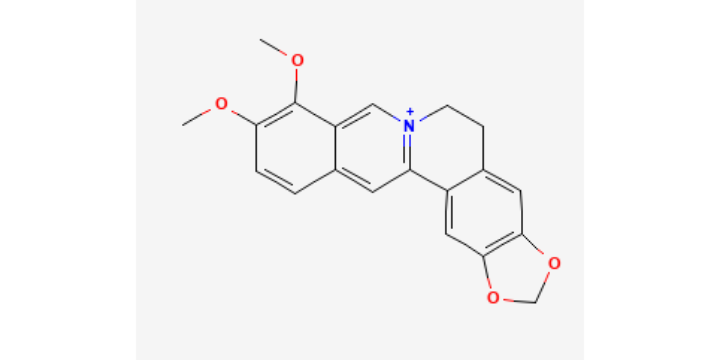
View compound record ->Berberine
Berberine is tracked as part of the peptide, metabolic, mitochondrial, NAD, or longevity research landscape, with claims separated by evidence type and product documentation.
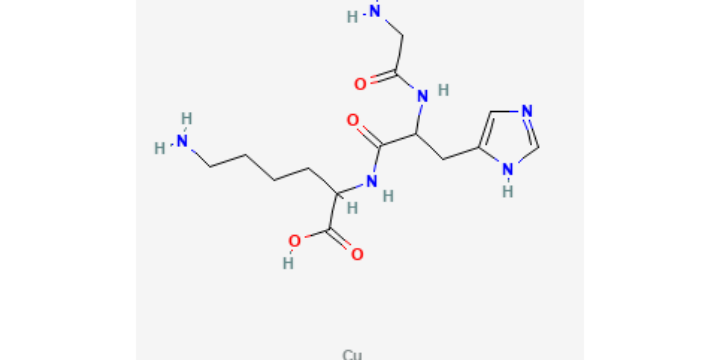
View compound record ->GHK copper
A copper-binding tripeptide often discussed in skin, wound-context, and cosmetic research, with evidence varying sharply by formulation and outcome.
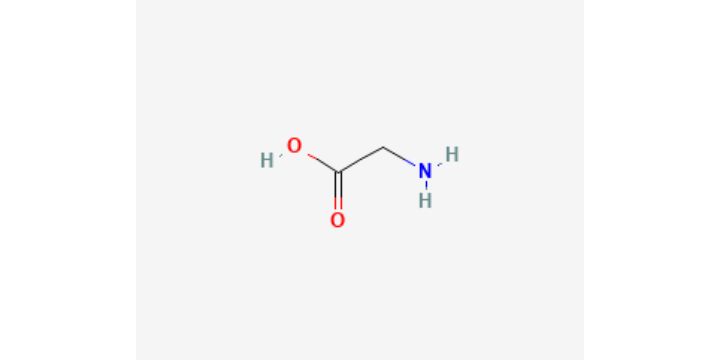
View compound record ->Glycine
Glycine is tracked as part of the peptide, metabolic, mitochondrial, NAD, or longevity research landscape, with claims separated by evidence type and product documentation.
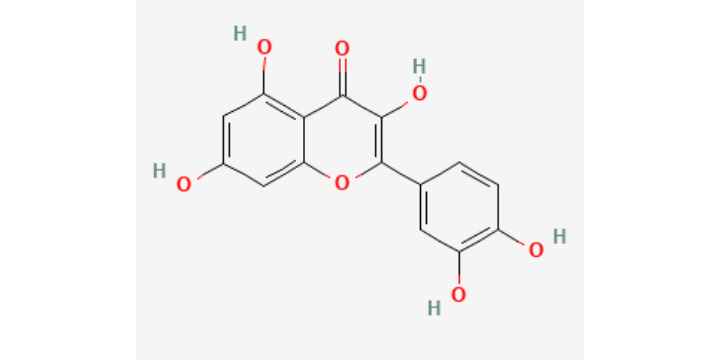
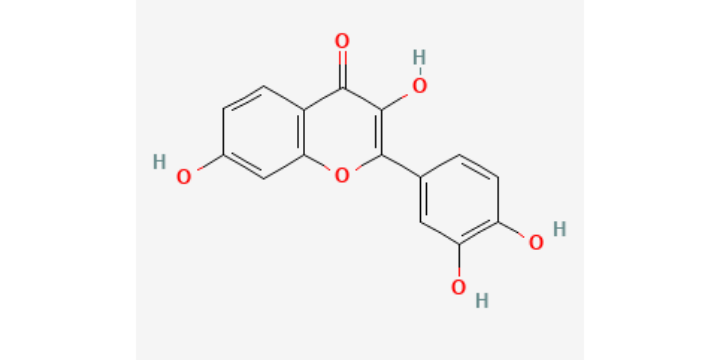
View compound record ->Quercetin
Quercetin is tracked as part of the peptide, metabolic, mitochondrial, NAD, or longevity research landscape, with claims separated by evidence type and product documentation.
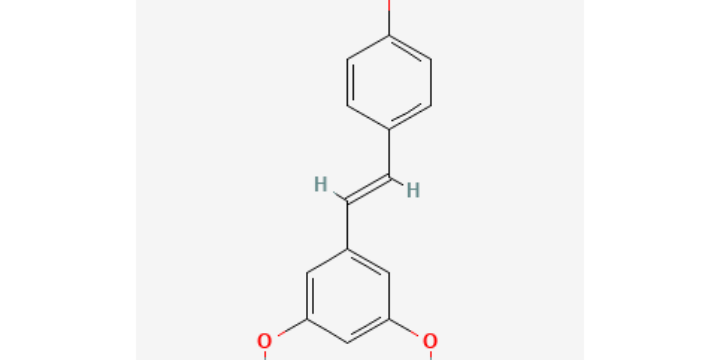
View compound record ->Resveratrol
Resveratrol is tracked as part of the peptide, metabolic, mitochondrial, NAD, or longevity research landscape, with claims separated by evidence type and product documentation.
View compound record ->Sermorelin
Sermorelin is tracked as part of the peptide, metabolic, mitochondrial, NAD, or longevity research landscape, with claims separated by evidence type and product documentation.
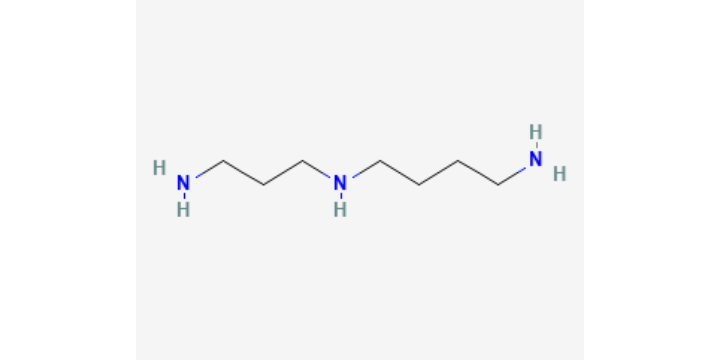
View compound record ->Spermidine
Spermidine is tracked as part of the peptide, metabolic, mitochondrial, NAD, or longevity research landscape, with claims separated by evidence type and product documentation.
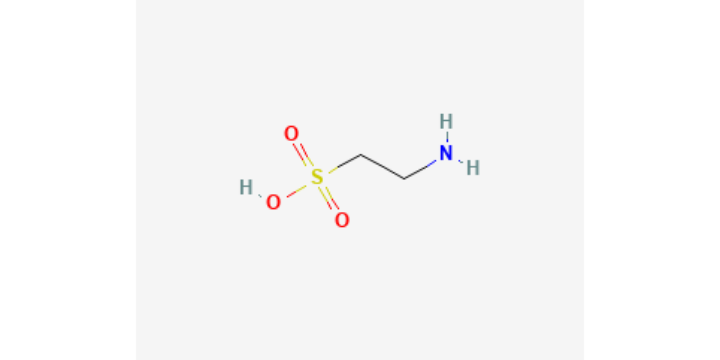
View compound record ->Taurine
Taurine is tracked as part of the peptide, metabolic, mitochondrial, NAD, or longevity research landscape, with claims separated by evidence type and product documentation.
View compound record ->Thymalfasin
Thymosin alpha-1 is tracked as part of the peptide, metabolic, mitochondrial, NAD, or longevity research landscape, with claims separated by evidence type and product documentation.
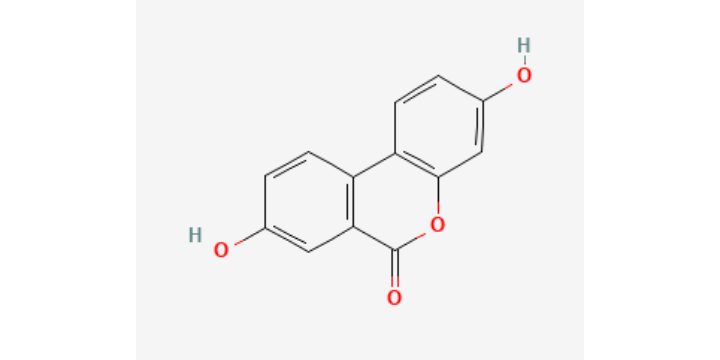
View compound record ->Urolithin-A
Urolithin A is tracked as part of the peptide, metabolic, mitochondrial, NAD, or longevity research landscape, with claims separated by evidence type and product documentation.
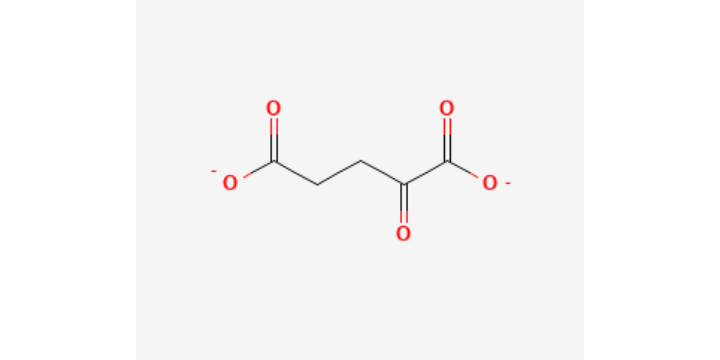
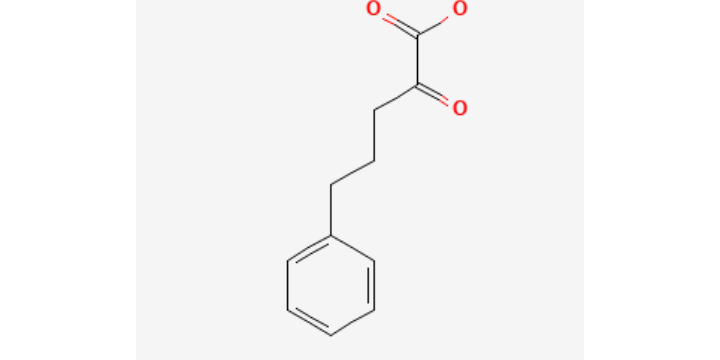
View compound record ->AKG
Alpha-ketoglutarate is tracked as part of the peptide, metabolic, mitochondrial, NAD, or longevity research landscape, with claims separated by evidence type and product documentation.
View compound record ->BPC 157
A synthetic peptide discussed for tissue repair and gastrointestinal models, with most public claims still relying on preclinical research.
View compound record ->CJC-1295
CJC-1295 is tracked as part of the peptide, metabolic, mitochondrial, NAD, or longevity research landscape, with claims separated by evidence type and product documentation.
View compound record ->Epitalon
Epitalon is tracked because it appears in peptide, NAD, metabolic, or longevity discussions and needs claim-by-claim evidence review.
View compound record ->Fisetin
Fisetin is tracked as part of the peptide, metabolic, mitochondrial, NAD, or longevity research landscape, with claims separated by evidence type and product documentation.
View compound record ->Humanin
Humanin is tracked as part of the peptide, metabolic, mitochondrial, NAD, or longevity research landscape, with claims separated by evidence type and product documentation.
View compound record ->Ipamorelin
Ipamorelin is tracked as part of the peptide, metabolic, mitochondrial, NAD, or longevity research landscape, with claims separated by evidence type and product documentation.
View compound record ->KPV
KPV is tracked because it appears in peptide, NAD, metabolic, or longevity discussions and needs claim-by-claim evidence review.
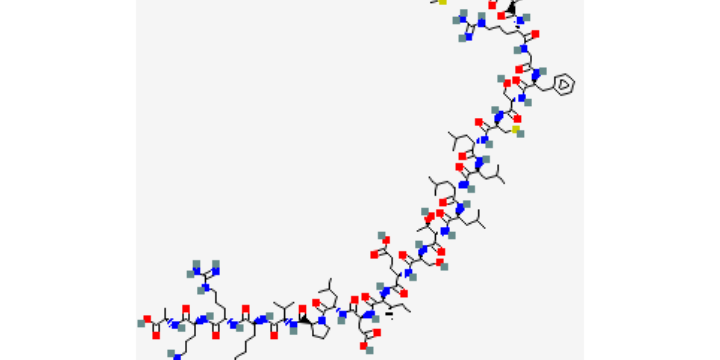
View compound record ->Cathelicidin LL-37
LL-37 is tracked as part of the peptide, metabolic, mitochondrial, NAD, or longevity research landscape, with claims separated by evidence type and product documentation.
View compound record ->Melanotan II
Melanotan II is tracked because it appears in peptide, NAD, metabolic, or longevity discussions and needs claim-by-claim evidence review.
View compound record ->MOTS-c
MOTS-c is tracked because it appears in peptide, NAD, metabolic, or longevity discussions and needs claim-by-claim evidence review.
View compound record ->NAD+
NAD+ is tracked because it appears in peptide, NAD, metabolic, or longevity discussions and needs claim-by-claim evidence review.
View compound record ->Selank
Selank is tracked as part of the peptide, metabolic, mitochondrial, NAD, or longevity research landscape, with claims separated by evidence type and product documentation.
View compound record ->Semax
Semax is tracked because it appears in peptide, NAD, metabolic, or longevity discussions and needs claim-by-claim evidence review.
View compound record ->Thymosin beta-4 fragment
A peptide commonly associated with thymosin beta-4 discussions and recovery claims, where evidence must be separated by exact molecule and model.
View compound record ->AOD9604
AOD-9604 is tracked as part of the peptide, metabolic, mitochondrial, NAD, or longevity research landscape, with claims separated by evidence type and product documentation.
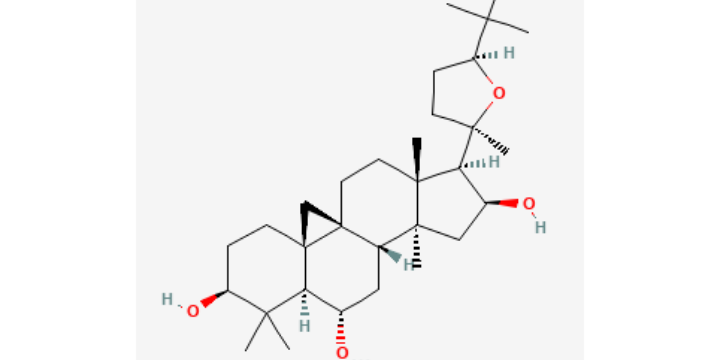
View compound record ->Cycloastragenol
Cycloastragenol is tracked as part of the peptide, metabolic, mitochondrial, NAD, or longevity research landscape, with claims separated by evidence type and product documentation.
View compound record ->DSIP
DSIP is tracked because it appears in peptide, NAD, metabolic, or longevity discussions and needs claim-by-claim evidence review.
View compound record ->No homepage compound matches that search. Open the complete repository for more records.
Explore by research purpose
Use these pages when you know the topic you are researching but not which compounds appear in the evidence.
Healing processes, inflammation, connective tissue and recovery, with preclinical and human findings kept separate.
BPC-157 · TB-500 · GHK-Cu 02NAD biology, energy pathways, metabolic markers and whether biomarker changes translate into meaningful outcomes.
NMN · NR · NAD+ 03Topical, cosmetic and systemic research involving collagen biology, pigmentation, hair growth and visible outcomes.
GHK-Cu · Melanotan II · topical peptides 04Approved medicines and investigational compounds separated by ingredient, formulation and clinical status.
Semaglutide · Tirzepatide · Retatrutide 05Compounds and pathways studied in relation to sleep timing, architecture, recovery and circadian signalling.
Epitalon · DSIP · melatonin pathways 06Senescence, mitochondrial biology, metabolic health and age-related biomarkers, without treating biomarkers as proof of longer life.
NAD+ precursors · senolytics · mitochondrial targetsInside every compound record
Each section answers a different question, so biological rationale, clinical evidence, safety information and supplier documents never blend into one score.
Identity, accepted names, molecular class and proposed biological pathways.
Claims grouped by the specific outcome researchers actually measured.
Mechanistic, cell, animal, observational and controlled-human evidence shown separately.
Population, methods, outcomes, results and limitations for each study.
Known safety information beside the gaps that current research cannot answer.
Observed events, plausible risks, contraindications and uncertainty by confidence level.
Available identity, purity and batch documents, plus what remains unverified.
Maintained records
Important changes appear on the relevant record with an exact date and a clear description of what changed.
New human study added to the metabolism and biomarker evidence map.
View update -> Safety reviewBPC-157Safety section revised to distinguish reported findings from major evidence gaps.
View update -> Trial outcomeSemaglutideStudy record updated with outcome definitions and longer-term follow-up context.
View update ->Laboratory documentation
A purity percentage, identity result or certificate of analysis can provide useful information, but none independently proves that a product is safe, sterile, correctly handled or clinically effective.
Learn how to read a COAWhether the tested material appears consistent with the stated compound.
What proportion of detected material appears to be the intended target under the stated method.
Sterility, endotoxins, contaminants, chain of custody, batch matching and laboratory independence.
Editorial standard
Evidence by type. Mechanistic, animal, observational and controlled-human findings are never treated as equivalent.
Limitations remain visible. Missing data, small samples, indirect outcomes and uncertainty stay beside the findings.
Commercial links are labelled. Affiliate relationships do not determine evidence summaries or documentation scores.
Records are dated. Every material update, correction and supplier-document check has a visible review date.
Read our editorial standards ->Frequently asked
No. The platform explains compounds, research, evidence limits, safety information and available documentation. It does not recommend treatment, dosing or purchasing decisions.
No. A COA can document selected test results for a particular sample or batch. Its value depends on the methods, laboratory, chain of custody, batch matching and what was not tested.
We do not give every compound one universal score. Evidence is mapped by claim, outcome, study type, population and current level of uncertainty.
Commercial links are clearly labelled and separated from research summaries, evidence interpretation and supplier-document reviews.
Peptide Record